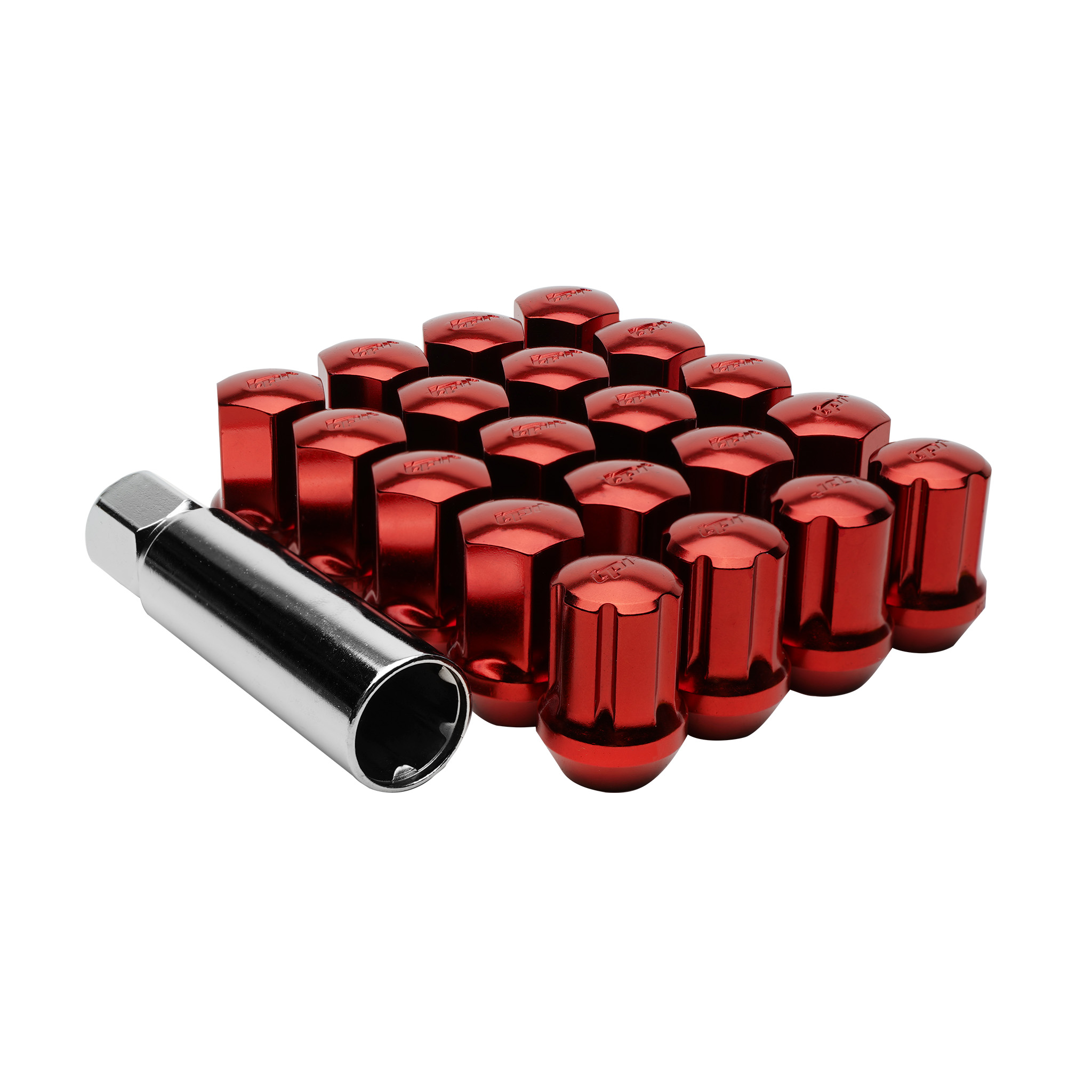
Lug Nut Types: How To Choose The Right One
Car enthusiasts obsess over horsepower, tire compounds, and suspension geometry. Still, few talk about lug nuts; the small hardware that literally keeps it all together. Those few grams of steel, aluminum, or titanium stand between a flawless drive and a wobbly disaster.
Choosing the correct lug nut types goes far beyond looks. The wrong design can throw off wheel balance, ruin threads, or even cause a wheel to loosen under load. Getting it right means knowing how the seat style, thread pitch, and material interact with your wheel setup.
At Function and Form, we’ve seen it too many times: someone installs a fresh set of wheels only to find the stock lug nuts don’t fit. Matching the correct lug nut style to your wheel and driving application supports a secure fit and a smoother ride. Before grabbing the next shiny set of nuts from the shelf, let’s explore what separates one type from another and why those differences matter more than most think.
Understanding Lug Nut Types and Their Role
The lug-nut seat design determines how a lug nut connects the wheel to the hub. It might sound simple, but that small contact point defines how well the wheel centers and how evenly the load distributes across the hub face. A mismatch between wheel seat and lug nut seat can lead to vibration, loosening, or even stud failure.
The conical seat remains the most common across aftermarket wheels. Often called an acorn or tapered seat, this style uses a 60-degree cone shape that guides the wheel into place as you tighten. That self-centering effect is what keeps the wheel balanced and stable at high speeds. Some racing wheels use a 45-degree conical seat, offering a wider surface area for more precise clamping.
European wheels often use a spherical seat, also known as a ball seat. Instead of a sharp taper, the nut’s end is rounded, matching the dome-shaped lug holes in the wheel. Using a conical nut on a spherical seat wheel might look like it fits, but the contact area is minimal. That small mismatch can cause uneven torque and cause the wheels to move once the car reaches speed.
Then there’s the mag seat, also called a shank-style lug nut. It features an extended, smooth shank that fits into the wheel’s lug hole and usually sits flush with a washer. The washer creates a large, flat surface for consistent clamping pressure. Because shank depth and diameter vary across wheels, measuring both before purchasing is vital. Too short and the threads don’t fully engage; too long and the nut bottoms out before tightening.
The ET-style lug nut builds on the conical design, adding a small, extended shank for extra thread engagement. It’s a clever solution for older vehicles that use shorter studs, especially when swapping to modern aluminum wheels. That small shank gives you more bite on the threads without requiring longer studs.
Flange-style lug nuts make sense for off-road setups. Their built-in flange helps center the nut in a small recess or directly on the wheel face. This design handles vibration and exposure to dirt better than most, making it common on ATVs, UTVs, and side-by-sides.
Are Lug Nuts Universal?
Not even close. Lug nuts might look similar, but they are anything but universal. Differences in seat design, thread pitch, and diameter mean a nut that fits one vehicle may completely fail on another. Think of it like matching tires to wheels; you wouldn’t run a 19-inch tire on a 17-inch rim.
The most crucial detail after seat type is thread pitch. Japanese manufacturers often use metric threads like M12x1.25 or M12x1.5, while many American cars use 1/2-20 or 9/16-18. Using the wrong thread pitch strips studs faster than most realize, and replacing them isn’t cheap. Always check both your wheel and vehicle specs before buying.
Even material choice affects fitment and longevity. Steel remains the standard for daily use due to its strength and cost. Aluminum and titanium appeal to racers for their weight savings. They require careful installation to avoid galling or thread damage. Coatings such as chrome or anodized finishes help resist corrosion and add visual flair, but looks should never override proper fitment.
When installing wheel spacers or extended studs, open-ended nuts often work best. Their open design allows the stud to pass through completely, giving maximum thread contact. This setup is typical in racing, where mechanics frequently change wheels multiple times during an event.
How Lug Nuts Affect Performance and Safety
Proper lug nut selection affects wheel alignment and how the suspension feels under load. A properly seated lug nut distributes torque evenly and keeps the wheel flush with the hub. That prevents vibration and extends bearing life. Incorrect seating leads to wobble, premature stud wear, and uneven brake pad contact.
Steel offers unmatched strength for heavy use, but titanium or hardened aluminum helps reduce rotating mass. The slight weight difference can make a measurable impact on lap times, especially when combined with lightweight wheels and coilovers designed for precision handling.
The finish also plays a role. Chrome and black zinc coatings resist corrosion from road salt and moisture. Anodized finishes add color and provide extra oxidation protection, keeping the nuts looking new through multiple seasons.
Torque accuracy ties everything together. Always torque lug nuts in a star pattern using a calibrated torque wrench. Over-tightening stretches the studs and weakens them, while under-tightening allows the wheel to move. Recheck torque after driving a short distance, especially after wheel changes or suspension work.

Function and Form: Where Performance Meets Precision
At Function and Form, we design products that balance form, fit, and performance for real enthusiasts. From lug nuts to fully adjustable suspension systems, our goal is to help you build the car you’ve always wanted.
If you’re unsure which lug nut style fits your setup, or want to talk through your build, our team is here to help. Reach out, and let’s get your project sitting right, looking sharp, and performing at its best. Get it low and get it right with Function and Form; the connection between you and the road starts at the very first turn of a lug nut.
Follow us on Instagram Here