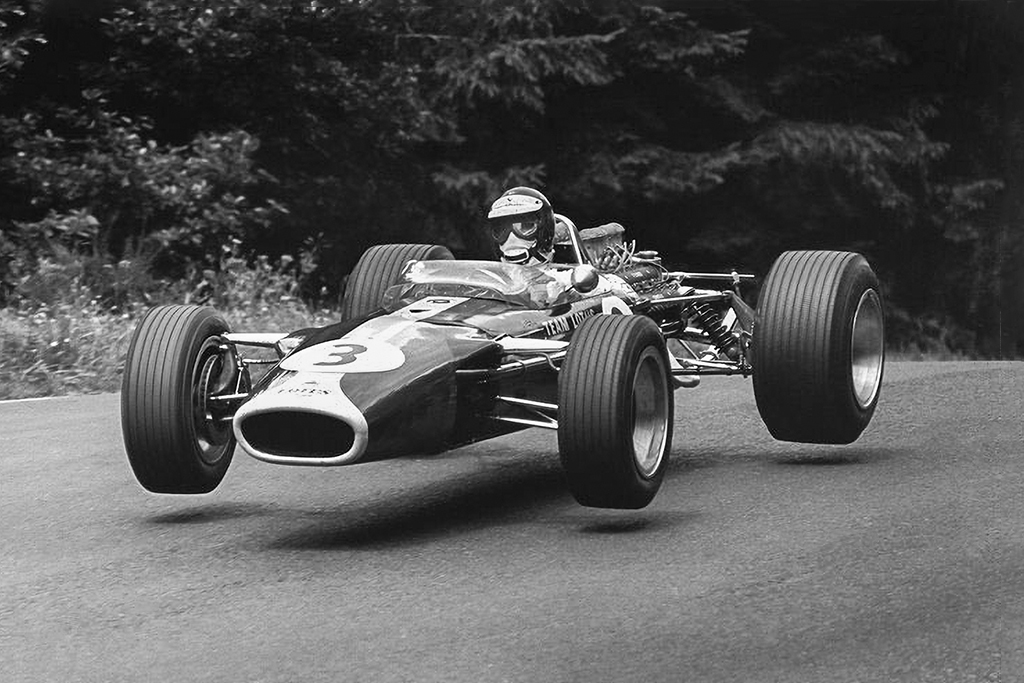
From the Track to the Streets: Coilovers F1 Origins
When you think of coilovers today, you might picture finely tuned street builds, track-ready time attack machines, or slammed show cars. But the origins of coilover suspension go back much further—deep into the high-stakes world of Formula 1 in the late 1950s and early 1960s.
Early Racing Suspension: From Leaf Springs to Coilovers
Before coilovers became the performance standard, most cars—both race and road—relied on leaf springs or separate coil springs with dampers mounted apart. Independent suspension designs had been explored for decades, but in the post-war era, cost and complexity often outweighed performance gains. Leaf springs were cheaper, familiar, and good enough for the relatively low aerodynamic loads of the time. Independent suspension simply wasn’t considered worth the trade-off—until the innovators of Formula 1 began pushing for something better.
Colin Chapman and the Lotus 25
One of the most influential figures in this shift was Lotus founder Colin Chapman. Never content to follow convention, Chapman sought speed through chassis and suspension innovation, not just engine power. His most famous breakthrough came in 1962 with the Lotus 25—a car that would change racing forever and stand as one of the most significant examples in the origins of coilover suspension.
The First Monocoque Chassis in Formula 1
The Lotus 25 debuted the first monocoque chassis in Formula 1, replacing the traditional spaceframe with a stressed-skin aluminum structure. This design was stiffer, lighter, and more compact than anything else on the grid. By eliminating much of the chassis flex, it allowed the suspension to perform more predictably and efficiently. It was the perfect platform for the integrated coilover setup Chapman envisioned.
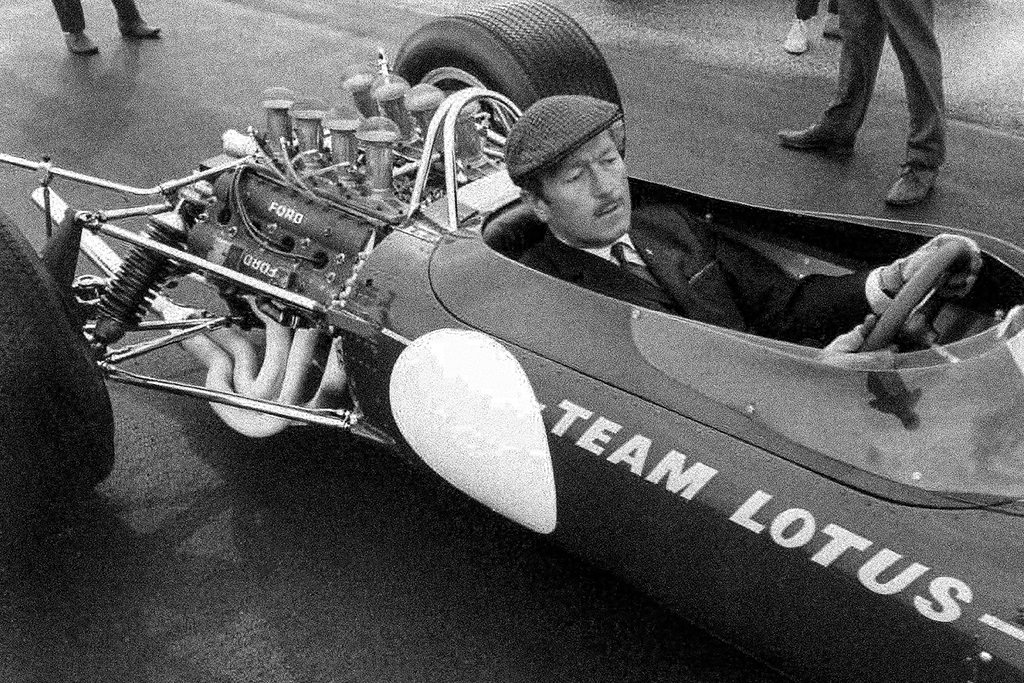
Coilover Suspension on the Lotus 25
On the Lotus 25, the coilover units combined the spring and damper into a single, compact assembly mounted directly to the suspension arms. This reduced unsprung weight and improved control over wheel movement, allowing for precise tuning of ride height, damping rates, and spring stiffness. With better grip over uneven surfaces, the Lotus 25 handled with an agility its rivals couldn’t match.
The results spoke for themselves—Jim Clark dominated the 1963 Formula 1 season in the Lotus 25, winning seven out of ten races and securing both the Drivers’ and Constructors’ Championships for Lotus. The car’s chassis and suspension design became a blueprint for modern motorsport engineering.
From the Track to the Street
Over time, as materials improved and manufacturing costs fell, coilover technology spread beyond Formula 1 into other racing disciplines and eventually into road cars. The same principles that made them a game-changer in the 1960s still apply today: a unified, adjustable spring-and-damper system that maximizes performance and handling. This lasting influence is why, when we talk about high-performance setups now, we’re really tracing a direct line back to the origins of coilover suspension.
From championship-winning Formula 1 cars to daily-driven street builds, the legacy of the Lotus 25 proves that great suspension design is timeless. Chapman’s innovation didn’t just change racing—it reshaped the way we think about handling, grip, and control.
Follow us on Instagram: https://www.instagram.com/functionandform/